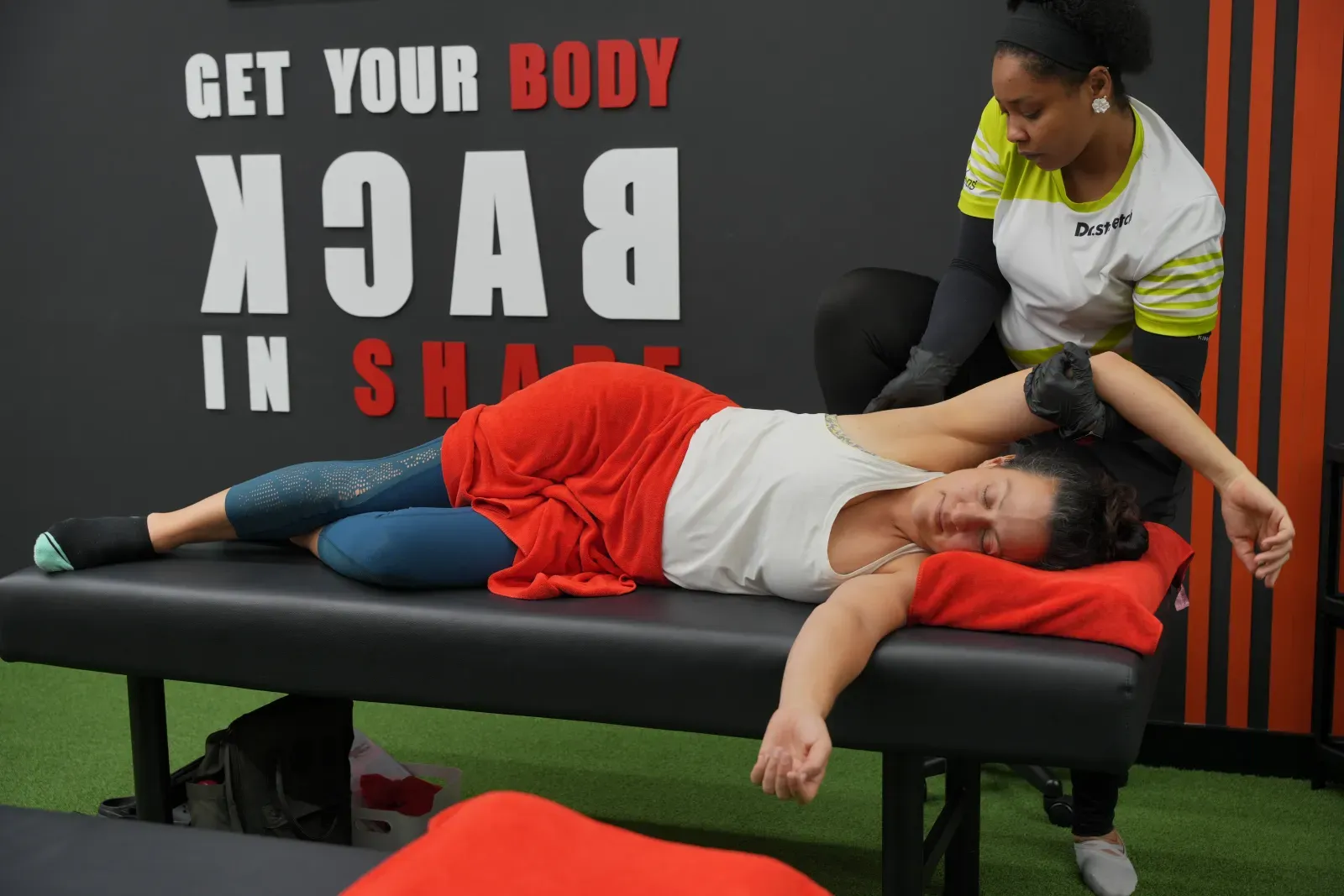
Assisted stretching is a professional, therapist-guided form of passive stretching designed to deepen muscle lengthening and improve flexibility beyond what you can achieve alone.[1] In a session, a certified practitioner moves your limbs (or uses straps and specialised equipment) to take muscles and joints further into a stretch, often using proprioceptive neuromuscular facilitation (PNF) techniques such as contract–relax cycles.[1]
Unlike solo stretching, assisted stretching targets deep muscle and fascial tissues under controlled conditions, enabling safe, gradual increases in range of motion. Clinically, physiotherapists use it to correct muscle imbalances, accelerate recovery, and relieve chronic tightness.[2] Biochemically, each session leverages your body's own neuromuscular reflexes: contracting a muscle before stretching triggers the Golgi tendon organ (GTO) reflex, causing autogenic inhibition: the muscle relaxes and allows a deeper stretch.[3]
This guide covers everything Dubai residents need to know: the underlying science, evidence-based benefits, who gains the most, specific pain conditions it addresses, what a session looks like, and where to find assisted stretching across Dubai.
The Science Behind Assisted Stretching
Assisted stretching triggers several simultaneous physiological adaptations that explain why it outperforms solo stretching for both flexibility gains and recovery speed.
Neuromuscular Modulation
PNF contract–relax techniques exploit the GTO reflex to inhibit the muscle's own stretch resistance. Contracting a tight muscle at roughly 50% effort before a passive stretch significantly suppresses spindle activity. The brain then "accepts" a greater range of motion.[3] This autogenic inhibition cycle (contract → relax → stretch) is the cornerstone of why assisted PNF stretching safely deepens flexibility faster than passive-only approaches.
Fascial Release
A 2021 narrative review found that during passive stretching, the deep fascia (the connective tissue surrounding muscles) is often the primary limit to tissue elongation, not the muscle fibres themselves.[4] Because fascia transmits approximately 30% of muscle force in parallel, loosening fascial planes through sustained assisted stretching can "unlock" new range that muscle-focused approaches miss. Emerging myofascial biomechanics research suggests regular assisted stretches may reduce fascial stiffness through a thixotropic effect over time.[4]
Circulation and Metabolic Recovery
Stretching dilates blood vessels and stimulates lymphatic flow. A randomised controlled trial published in The Journal of Physiology (2020) found that participants who performed daily leg stretches for 12 weeks showed significantly improved blood flow, reduced arterial stiffness, and lower blood pressure compared with a control group.[5] Enhanced muscle perfusion helps flush metabolic waste and deliver oxygen and nutrients, directly supporting faster post-exercise recovery.[6]
Autonomic Balance and Stress Response
Inami et al. (2014) measured heart rate variability during static stretches and found that sustained holds acutely shifted autonomic activity toward parasympathetic (rest-and-digest) dominance. Heart rate dropped and parasympathetic markers remained elevated for several minutes after stretching ended.[7] This neurological relaxation response is why assisted stretching delivers both physical recovery and measurable stress reduction in a single session.
Long-Term Mobility Adaptation
Repeated sessions produce lasting structural changes. Multiple meta-analyses confirm that consistent stretching protocols (several sessions per week over multiple weeks) reliably increase joint range of motion and muscle compliance through both neural changes (higher stretch tolerance, reduced reflex resistance) and gradual connective tissue remodelling.[8]
Assisted Stretching vs. Massage Therapy: Key Differences
Both are hands-on therapies, but they target different outcomes. Understanding the distinction helps you choose the right tool for your goal.
| Assisted Stretching | Massage Therapy | |
|---|---|---|
| Primary Focus | Lengthening muscles and increasing joint range of motion | Manipulating muscle and fascia to relieve tension and boost circulation |
| Techniques | Therapist-guided static and PNF stretches; client is passively guided[1] | Kneading, rolling, and sustained pressure on soft tissues (deep tissue or Swedish) |
| Immediate Effect | Measurable gains in flexibility and range of motion after a single session | Immediate relief of muscle tightness and soreness; deeply relaxing |
| Recovery Benefit | Best for long-term mobility: expands stretch tolerance and muscle length over time | Best for short-term recovery: reduces DOMS and oedema quickly[9] |
| Pain Relief | Reduces chronic tension by restoring alignment and full joint mobility | Alleviates acute pain via trigger-point pressure; more effective for DOMS[9] |
| Best For | Improving posture, flexibility, rehabilitation from chronic tightness | Relieving workout soreness, relaxing after intense exercise, acute muscle knots |
The verdict: Use assisted stretching for long-term mobility and postural correction; use massage for acute recovery. Many Dubai wellness studios recommend combining both modalities. The effects are complementary, not redundant.
7 Evidence-Based Benefits of Assisted Stretching
1. Greater Flexibility and Range of Motion
Clinical trials confirm that assisted stretching programmes produce statistically significant joint flexibility gains. Stanziano et al. (2009) ran an 8-week assisted stretching trial with elderly participants (mean age 88) and found significant improvements in range of motion across multiple joints and in functional performance tests (all p < 0.05).[10] Everyday movements (reaching overhead, stepping over obstacles, rotating to reverse a car) become measurably easier over time.
2. Improved Posture and Spinal Alignment
Tight chest and hip-flexor muscles chronically pull the spine into flexion, causing rounded shoulders and anterior pelvic tilt. Assisted stretching specifically lengthens these pattern-overloaded muscles, allowing the spine to return to neutral. Providers consistently report that clients "stand taller" and experience less postural strain after a course of sessions.[2][11]
3. Pain and Chronic Tension Relief
Assisted stretching relaxes chronically shortened muscles that compress joints and sensitise pain receptors. Research documents that regular assisted stretching alleviates muscle tension and significantly reduces chronic pain levels in treated areas.[12] Clients most commonly report relief from neck tightness, lower back ache, and hip stiffness.
4. Enhanced Circulation and Faster Recovery
The Journal of Physiology (2020) RCT demonstrated that daily leg-stretching protocols over 12 weeks produced improved blood flow and reduced arterial stiffness, with systemic cardiovascular benefits extending beyond the stretched limb.[5] For athletes, this translates to quicker clearance of metabolic waste, faster muscle repair, and reduced next-day soreness.[6]
5. Stress Reduction and Improved Sleep Quality
The parasympathetic shift documented by Inami et al. (2014) means assisted stretching sessions actively down-regulate the nervous system.[7] Many clients report deeper sleep and reduced stress after establishing a regular stretch routine. This is particularly relevant in Dubai's high-pressure professional environment.
6. Improved Athletic Performance
Greater joint mobility directly expands the range through which muscles can generate force. Research indicates more flexible athletes achieve better performance metrics (speed, agility, power output) and sustain fewer overuse injuries.[3][11] Assisted stretching is now a standard tool in the recovery protocols of professional sports teams worldwide.
7. Injury Prevention
By correcting muscle imbalances and maintaining full range of motion in load-bearing joints, regular assisted stretching reduces the mechanical risk factors for strains, tendinopathies, and overuse injuries.[13][11] A muscle that moves freely through its full range is biomechanically less vulnerable than one chronically operating near its extensibility limit.
Who Benefits Most from Assisted Stretching?
Assisted stretching is highly adaptable across age groups and activity levels. It is particularly effective for the following groups:
Office Workers and Desk-Bound Professionals
Prolonged sitting compresses hip flexors, shortens hamstrings, and encourages a forward-head posture. Assisted stretching targets precisely these areas to counteract the physical toll of desk work, correcting the rounded-shoulder, anteriorly tilted pelvis pattern that accumulates over years of sedentary office life.[2] Dubai's large corporate workforce, frequently working long hours in air-conditioned offices, represents one of the highest-need populations for this intervention.
Athletes and Fitness Enthusiasts
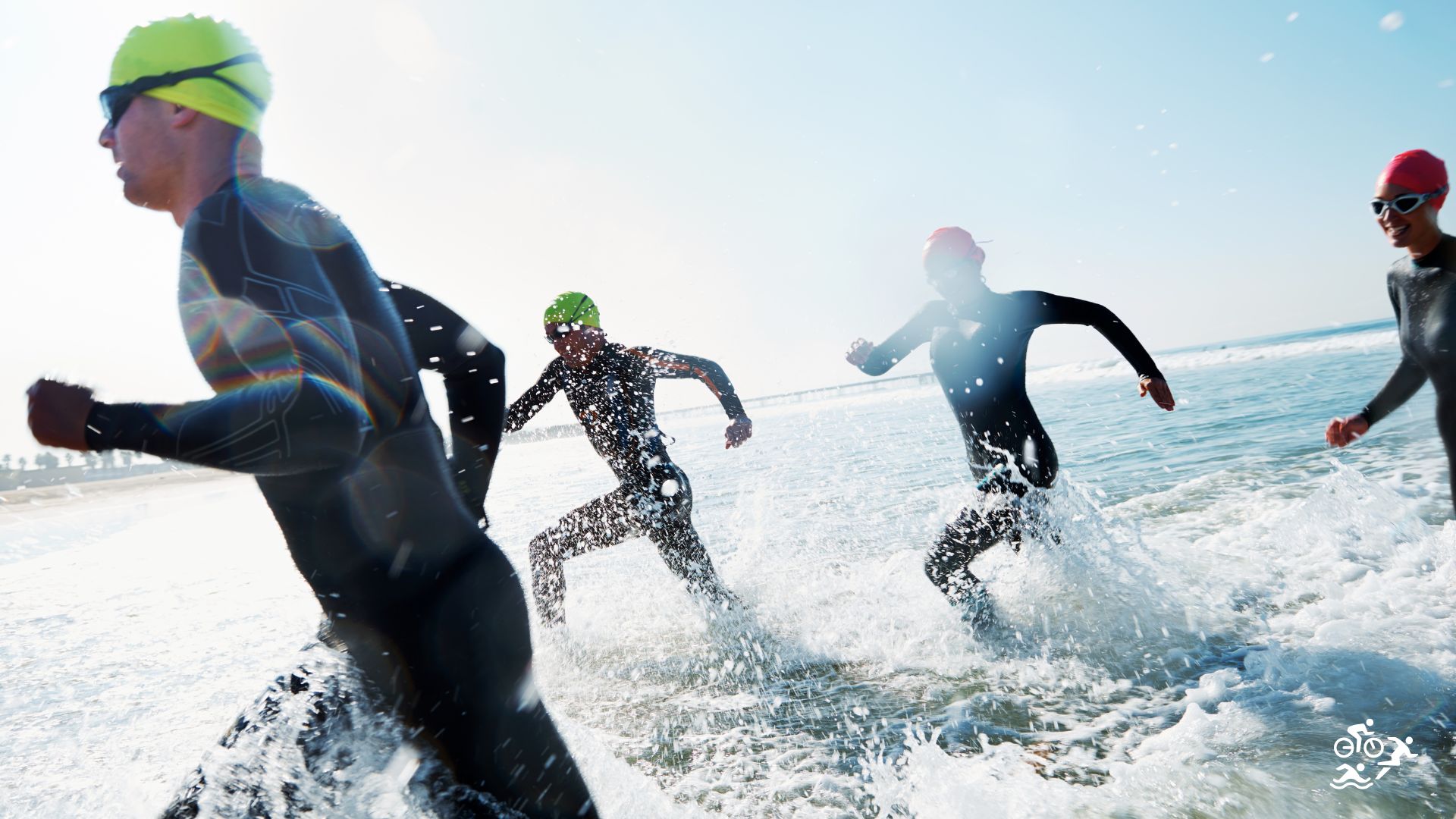
Runners benefit from assisted hamstring, calf, and hip-flexor stretches that help prevent iliotibial band syndrome and calf strains. Cyclists gain from hip-flexor and thoracic rotational work. Swimmers and CrossFit athletes use shoulder and thoracic mobility work to improve stroke mechanics and overhead positioning. Research consistently shows that stretching enhances performance by increasing flexibility and range of motion.[12]
Golfers and Racquet Sports Players
Golf swings and throwing sports demand rotational thoracic mobility and hip-to-shoulder dissociation. Assisted thoracic and shoulder stretching can add measurable degrees to the swing arc and reduce the compensatory low-back loading that causes chronic lumbar pain in recreational golfers.
Older Adults and Post-Rehabilitation Patients
Seniors gain disproportionately from assisted stretching. The Stanziano et al. (2009) Johns Hopkins pilot study found that twice-weekly assisted sessions for 8 weeks produced significant functional performance improvements in adults with a mean age of 89, including measurable gains in balance and mobility tests linked to fall-risk reduction.[10]
Frequent Long-Haul Travellers
Dubai is a global travel hub. Long-haul flights compress the hip flexors, tighten the thoracic spine, and reduce lower-limb circulation. A single assisted stretching session after a transatlantic or East-Asia flight can rapidly restore mobility and reduce the circulatory stagnation associated with prolonged cabin travel.
Anyone Managing Chronic Pain or Limited Mobility
From competitive gym-goers to sedentary individuals, anyone with persistent muscle tension or restricted movement can benefit. Clients managing lower back pain, sciatica, chronic neck stiffness, or general hypomobility commonly use assisted stretching as a conservative, non-invasive component of a long-term management plan.
Assisted Stretching for Specific Pain Conditions
Lower Back Pain
Tight hamstrings, shortened hip flexors, and inhibited glutes are the three most common biomechanical contributors to lumbar pain. When chronically shortened, these muscles increase compressive load on the lumbar discs and sacroiliac joint. Assisted stretching systematically addresses each of these areas under controlled, therapist-guided conditions, relieving spinal compression without the risks associated with aggressive manipulation. Many clients report significant reductions in lower back stiffness within four to six consistent sessions.
Hip Tightness and Sciatica
Piriformis tightness can impinge the sciatic nerve, generating the characteristic radiating pain that runs from the buttock down the leg. Deep gluteal and piriformis assisted stretches allow very precise, controlled hip external rotation that decompresses the nerve pathway. A therapist can hold the pelvis stable while rotating the hip. That degree of control is impossible in solo stretching.
Neck and Shoulder Tension
Forward-head posture from screen use loads the cervical extensors with up to 4–5 times more force than neutral head position. Assisted cervical traction and upper-trapezius stretches decompress the cervical facets and relax the overloaded posterior neck chain, often reducing tension headaches alongside neck pain itself.
Mid and Upper Back Pain (Postural)
Thoracic kyphosis from habitual hunching compresses the anterior vertebral bodies and restricts rib cage expansion. Assisted chest-opening and upper-back extension stretches reverse this compression, restore thoracic extension, and can improve breathing mechanics. This is a secondary benefit many clients notice but rarely anticipate.
Delayed-Onset Muscle Soreness (DOMS)
While assisted stretching can ease the perception of soreness, research suggests massage is generally more effective for acute DOMS reduction.[9] That said, assisted stretching after intense training promotes recovery by improving circulation and reducing residual muscle tension, making it a valuable complement to massage in a post-training recovery protocol.[6]
Chronic Muscle Tension (Calves, Quadriceps, Forearms)
Long-standing muscle tightness in peripheral muscles (common in runners, cyclists, and keyboard workers) creates compensatory joint loading upstream. Assisted stretching systematically addresses these tissues. Studies confirm that regular assisted stretching alleviates muscle tension and produces significant reductions in chronic pain levels in treated areas.[12]
What Happens During an Assisted Stretching Session?
A typical session at a Dubai assisted stretching studio follows a structured, evidence-based process:
Step 1: Intake and Consultation
You arrive a few minutes early to complete a brief intake questionnaire. Your stretch therapist (often certified as a Flexologist®) discusses your goals, injury history, and specific problem areas.[14] This ensures the session is targeted, not generic. A client managing lower back pain receives a fundamentally different routine from a marathon athlete.
Step 2: Postural Assessment
The therapist performs a quick physical check of your standing posture and active mobility, assessing shoulder position, pelvic tilt, and spinal alignment. A series of test movements identifies the tightest areas and any asymmetries that need correction.[14]
Step 3: The Assisted Stretching Routine
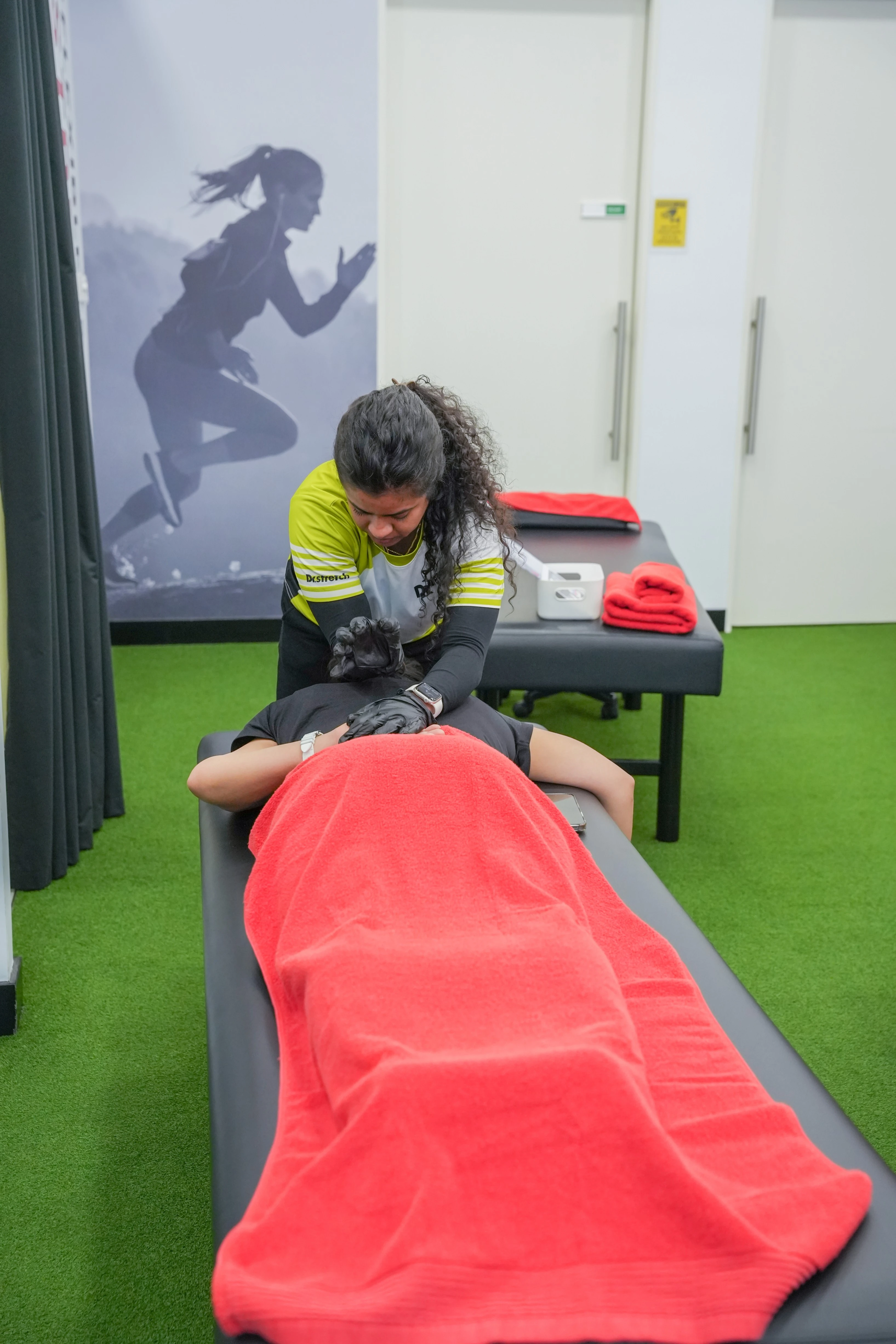
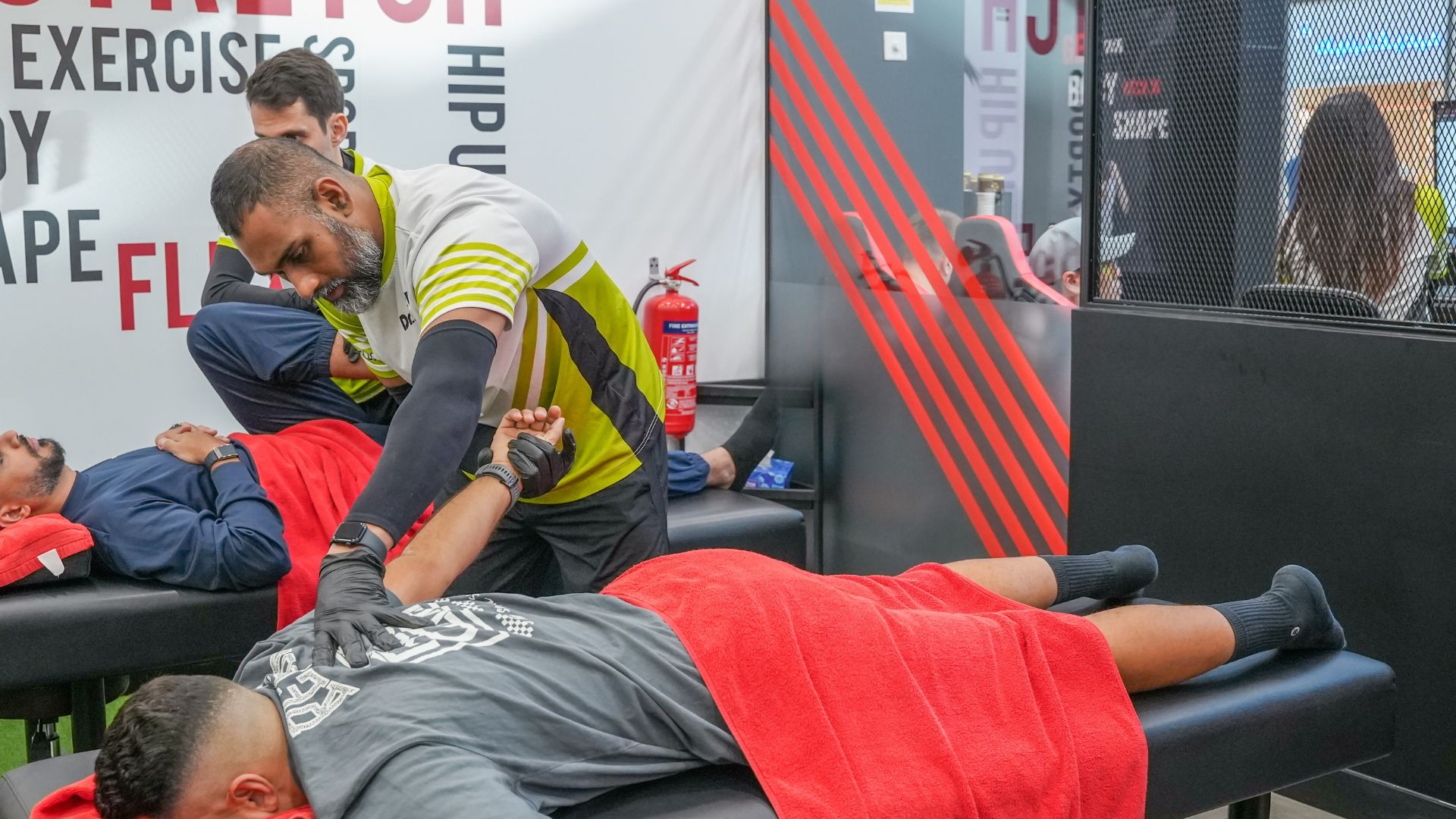
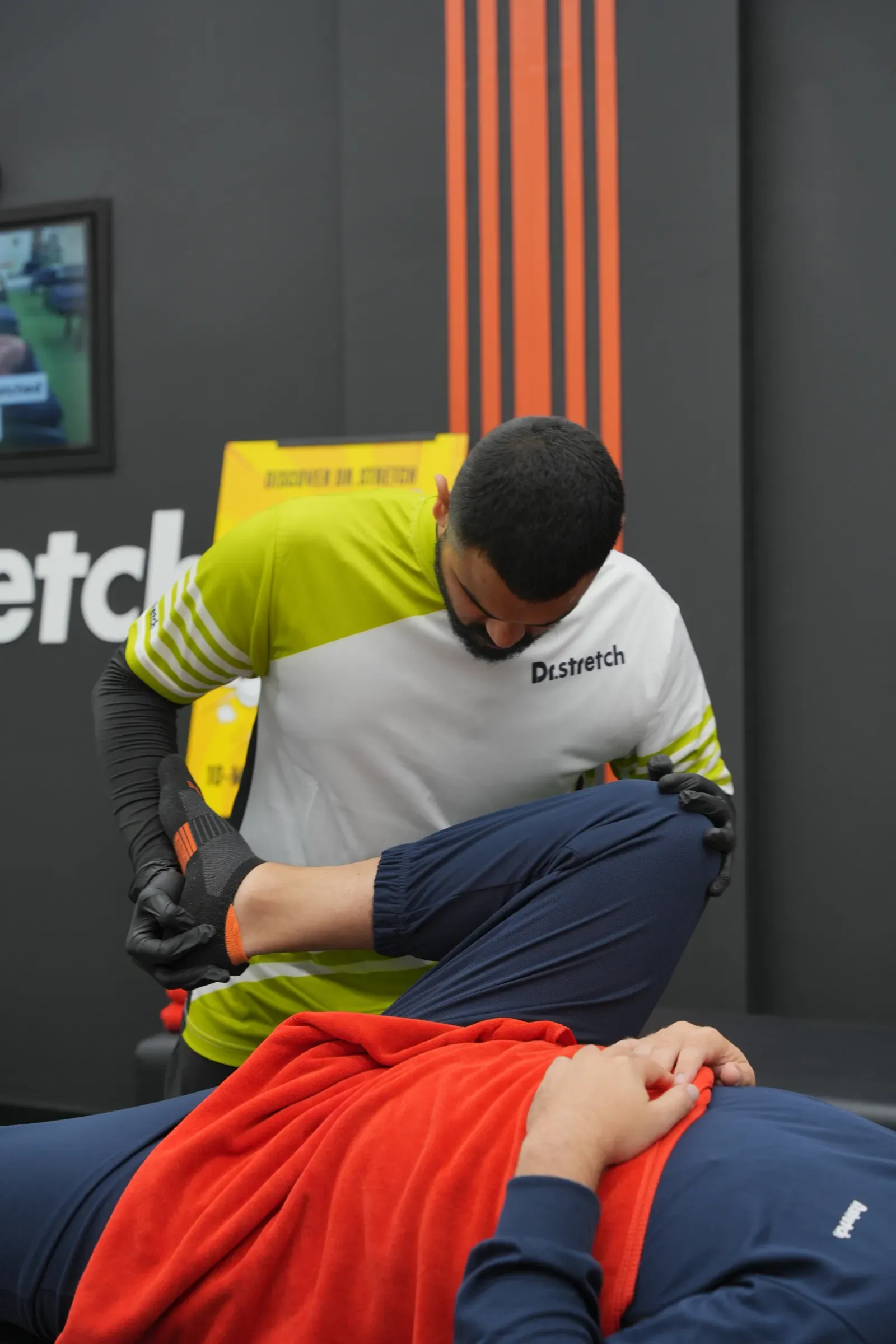
Wearing comfortable clothing (studios typically provide loungewear), you work one-on-one with your therapist through a customised sequence of stretches. Each position is entered slowly and held for 10–30 seconds, then deepened as the muscle releases. PNF techniques are layered in where appropriate: you'll be asked to gently push against the therapist's resistance, then relax into a deeper position.[1][14] Throughout, communication is continuous. The therapist checks your comfort and adjusts pressure so the stretch is productive, never painful.
Step 4: Cool-Down and Aftercare Coaching
The session closes with a gentle cool-down. Your therapist provides feedback on areas of improvement and teaches two or three maintenance stretches to practise between sessions.[14] Hydration advice and session-frequency guidance are also given at this stage.
Step 5: Session Frequency and Duration
Most Dubai studios offer 30- and 60-minute sessions. For therapeutic goals, clinical trials have shown that twice-weekly 40–60 minute sessions over 8 weeks produce significant, measurable range-of-motion improvements.[8] For general wellness maintenance, one session per week is sufficient to sustain gains over time.
Why Assisted Stretching Is Booming in Dubai
Dubai's rapid adoption of assisted stretching reflects a convergence of lifestyle pressures and cultural factors that make the city unusually fertile ground for this modality.
A high-pressure corporate culture creating physical demand. Dubai's economy is dominated by finance, real estate, logistics, and professional services. These are sectors characterised by long working hours and desk-centric roles. UAE corporate wellness spending reached $255.8 million in 2025 and is projected to grow at approximately 4.1% annually through 2033, with stress management programmes as the fastest-growing segment.[15] Assisted stretching fits this market precisely: it delivers measurable stress reduction and physical recovery in a single 60-minute session.
An active, fitness-aware population. Dubai hosts one of the highest gym membership densities in the world relative to its population. CrossFit boxes, cycling studios, padel courts, and marathon training groups are embedded in every major residential community. This active demographic generates significant demand for professional recovery services. Assisted stretching is increasingly positioned alongside cryotherapy, IV therapy, and sports massage as a premium recovery tool.
Infrastructure that makes it convenient. Dubai's mall-integrated fitness culture, dense cluster of residential towers, and premium service expectations mean that booking a stretch session during a lunch break or after a school run is genuinely practical. Studios located within lifestyle malls and mixed-use developments eliminate the logistical friction that limits adoption in other markets.
International residents with wellness awareness. Dubai's expatriate majority includes a large proportion of residents from markets where stretch therapy is already mainstream: the United States, United Kingdom, and Australia. Concepts like PNF stretching, Flexology®, and mobility coaching arrive pre-understood. This shortens the education cycle and accelerates adoption compared with markets where the category needs building from scratch.
Assisted Stretching in Dubai: Where to Book
Dr.stretch operates three studios in Dubai and two in Abu Dhabi. Below are the Dubai studios, the areas each one serves, and where to go if you are based somewhere we have not opened yet.
Palm Jumeirah – Golden Mile
The Palm's affluent residential communities and five-star hotel corridor have driven demand for premium, results-oriented wellness services. Assisted stretching fits naturally alongside spa treatments and personal training on the Palm. Residents here typically seek high-quality, private one-on-one experiences. Our studio is on the ground floor of Golden Mile 5 and is open daily.

Dubai Hills and Al Barsha
Dubai Hills Mall and the surrounding family communities represent one of Dubai's fastest-growing residential corridors. The demographic mix of young families, UAE nationals, and fitness-conscious professionals creates strong demand for accessible wellness services. The area's lower traffic congestion compared with central Dubai makes it particularly convenient for regular, consistent bookings. Our studio is on Level 1 of Dubai Hills Mall.
Nad Al Sheba and Meydan
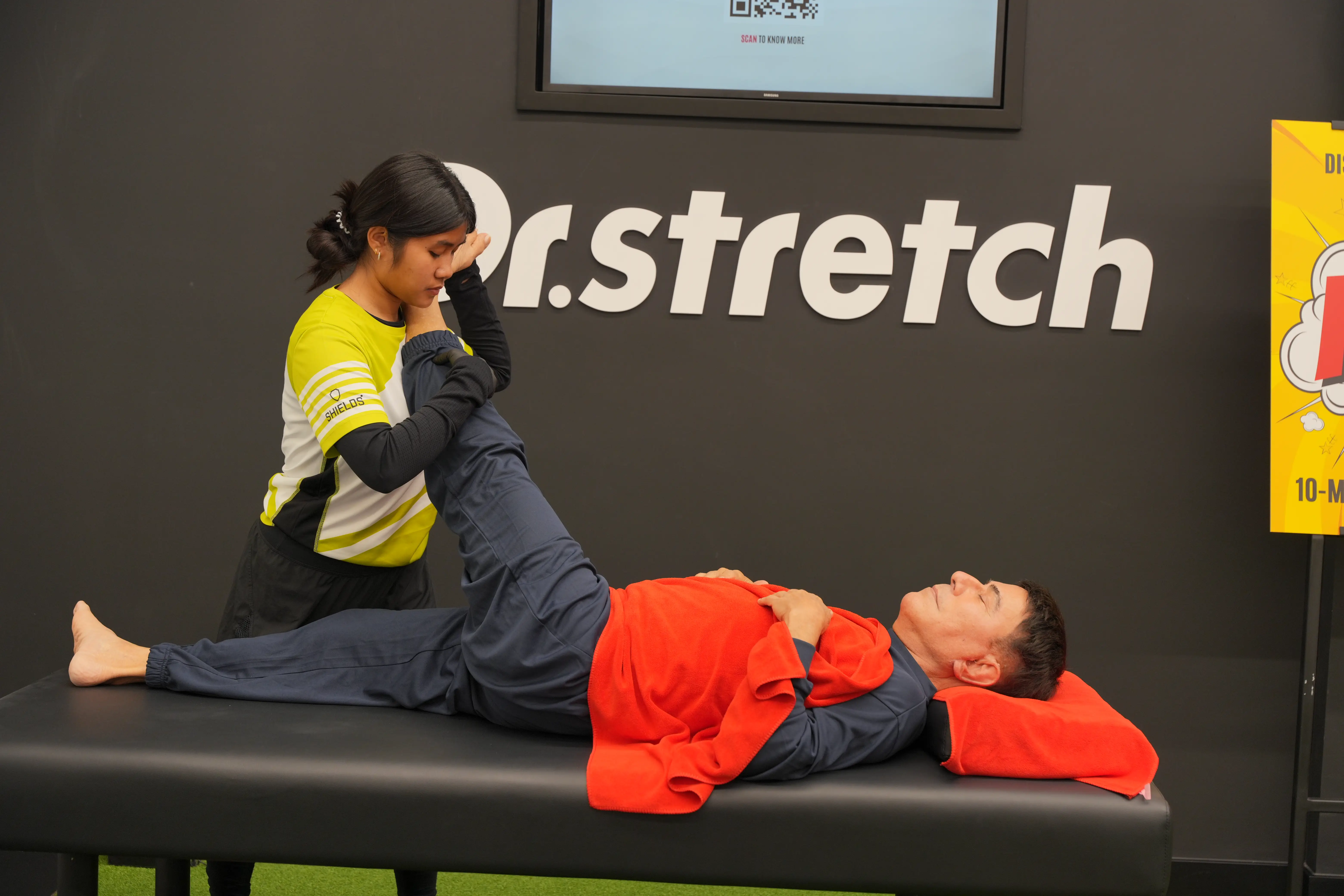
Nad Al Sheba and the surrounding Meydan communities sit within easy reach of central Dubai while keeping the calm, residential feel that makes a recovery routine easy to stick to. The area draws runners, cyclists, and equestrian riders alongside young families, all of whom tend to accumulate the kind of hip, hamstring, and lower-back tightness that responds well to assisted stretching. Our studio is on Level 2 of Nad Al Sheba Mall and is open daily.
Dubai Marina and JBR
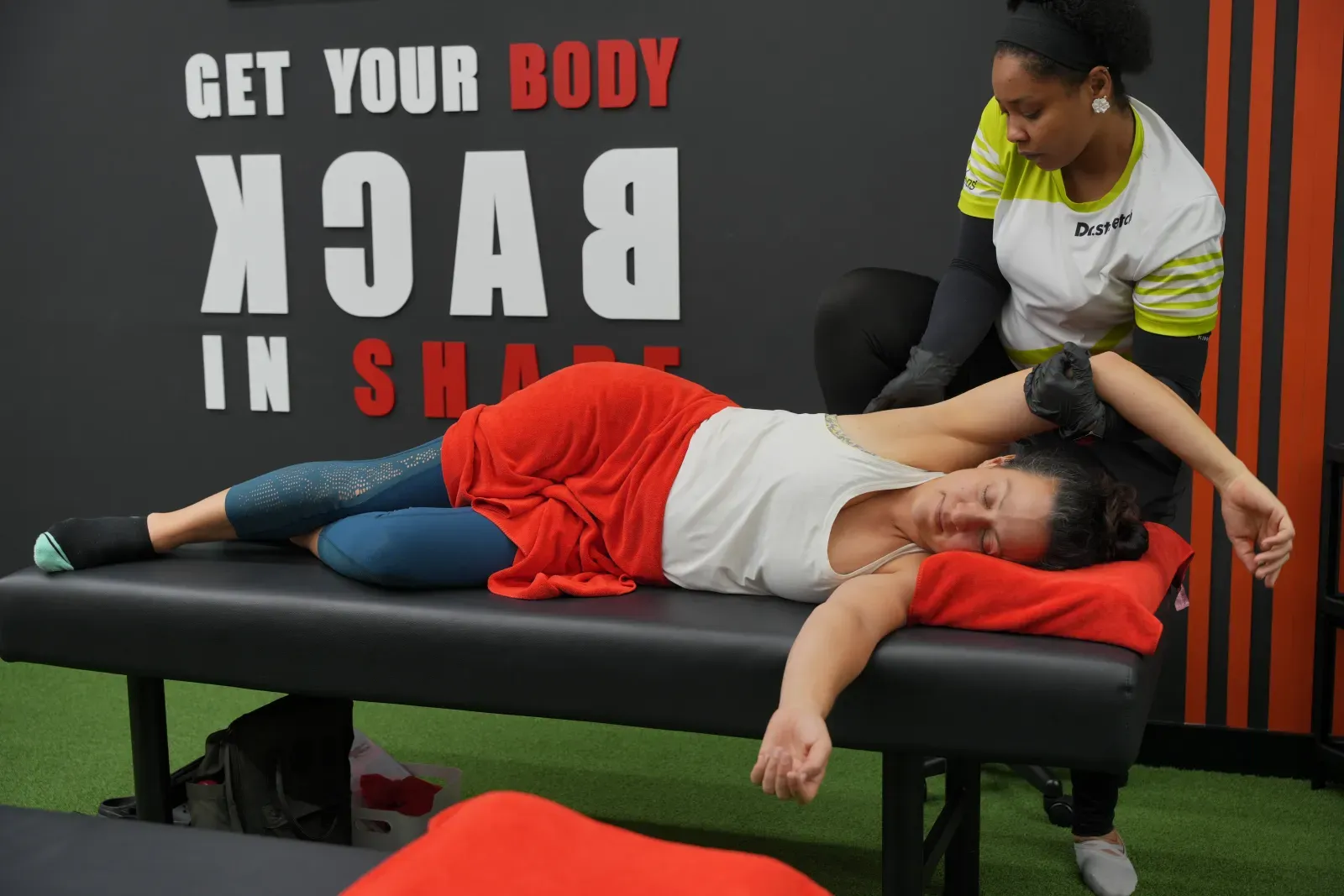
Dubai Marina is home to one of the UAE's densest concentrations of fitness clubs, cycling studios, and wellness venues, alongside a large professional and expat residential population. The area's walkable waterfront promenade and cluster of premium gyms make it a natural home for recovery-focused services. Residents and professionals in the Marina frequently deal with desk-related hip and back tightness, and stretch therapy sessions slot neatly between morning workouts and working hours.
We do not have a studio in the Marina itself. The closest Dr.stretch is Golden Mile on Palm Jumeirah, a short drive across the bridge.

Downtown Dubai and DIFC
The Downtown and DIFC corridor contains Dubai's highest concentration of corporate offices, making it one of the most compelling areas for lunchtime or post-work assisted stretching. The combination of long desk hours, high stress, and limited daily movement makes this population a high-need group for targeted mobility therapy.
There is no Dr.stretch studio in Downtown or DIFC yet. The nearest are Nad Al Sheba Mall and Dubai Hills Mall. For teams, we also run sessions at your office through our corporate wellness programme.
Booking: Dr.stretch operates five studios across Dubai and Abu Dhabi. Visit drstretch.ae/contact for studio addresses, opening hours, session pricing, and WhatsApp booking.
Frequently Asked Questions About Assisted Stretching in Dubai
Is assisted stretching safe?
Yes, when performed by a qualified professional it is generally safe. Practitioners adapt each stretch to your body's needs and pain threshold. If you have serious medical conditions such as osteoporosis, recent surgery, or active inflammation, consult your doctor before starting. With these precautions in place, assisted stretching is a safe and effective way to deepen flexibility and relieve chronic tightness.[16][2]
How often should you do assisted stretching?
It depends on your goals. For general maintenance, most people start with 1–2 sessions per week. Clinical protocols use two 40–60 minute sessions per week to achieve significant gains over 6–8 weeks.[8] Consistency compounds: regular shorter visits are more effective than sporadic, intense sessions.
Is assisted stretching better than massage?
They serve different purposes. Assisted stretching is the superior choice for improving long-term flexibility, mobility, and postural alignment. Massage is better for immediate relief of acute soreness and nervous system stress. Many Dubai studios advise combining both: massage for acute pain episodes, assisted stretching for sustained mobility gains.[9]
Can assisted stretching improve my posture?
Yes. Tight muscles, particularly the chest, hip flexors, and anterior shoulder, chronically pull the body into poor postural alignment. By lengthening those muscles, assisted stretching allows the spine and pelvis to return to neutral. Clients frequently report standing taller and experiencing less postural fatigue after a series of sessions.[2][11]
Does assisted stretching help back pain?
Yes. Many people with lower back or sciatica-related pain benefit. Targeted stretches of the posterior chain (hamstrings, glutes, piriformis) and hip flexors can unload spinal compression and reduce nerve irritation. Research consistently shows that reducing muscle tension and increasing flexibility through stretching produces measurable pain reduction.[12]
Is assisted stretching good for athletes?
Yes. Athletes use assisted stretching to enhance performance and speed recovery. Greater flexibility and optimised muscle function translate to improved agility, better movement mechanics, and reduced injury risk. It also helps injured athletes safely regain full range of motion during rehabilitation.[12][11]
Can stretching improve flexibility permanently?
Consistent stretching protocols produce lasting increases in range of motion. The body adapts to a new longer muscle length over weeks of regular sessions, through both neural changes (higher stretch tolerance) and gradual tissue remodelling.[8] Gains require maintenance; flexibility can regress if sessions stop entirely. Many clients find the new mobility becomes their natural baseline with ongoing regular practice.
Is assisted stretching painful?
It should not be painful. Therapists apply gentle, controlled pressure so you feel a productive stretch without sharp pain. You may experience mild discomfort if muscles are very tight. This typically eases as tension releases. Open communication throughout is essential; a qualified therapist will always reduce pressure immediately if you report pain.[14]
Scientific Evidence: Key Studies Supporting Assisted Stretching
The following peer-reviewed research underpins the claims and recommendations in this guide.
- Stanziano et al. (2009), Johns Hopkins University: Elderly Flexibility Trial
- An 8-week clinical trial with adults averaging 88 years of age. Twice-weekly assisted stretching sessions produced statistically significant range-of-motion improvements across multiple joints and improvements in functional performance tests (all p < 0.05).[10]
- Fascial Stretching Review, DOAJ Narrative Review (2021)
- Found that during passive stretching, the deep fascia is often the primary mechanical limit to tissue elongation, not the muscle fibres themselves. This reframes effective stretch therapy as addressing fascial compliance, not just muscle length.[4]
- Neuromuscular Mechanism, ACE Fitness Biomechanical Research
- Explains how contracting a muscle before stretching (PNF) triggers GTO-mediated autogenic inhibition, markedly reducing the muscle's own resistance to lengthening. This is the physiological basis for why assisted PNF stretching outperforms passive stretching alone.[3]
- Inami et al. (2014), Autonomic Response Study
- Measured heart rate variability during static stretching. Sustained holds acutely shifted autonomic balance toward parasympathetic dominance, with heart rate significantly lower after stretching, confirming a built-in relaxation benefit independent of the flexibility gains.[7]
- The Journal of Physiology (2020), Circulation RCT
- A randomised controlled trial in which daily leg-stretching protocols over 12 weeks produced significantly improved blood flow, reduced arterial stiffness, and lower systolic blood pressure, demonstrating systemic cardiovascular benefits from flexibility exercise.[5]
- Frontiers in Physiology (2024), Flexibility Meta-Analysis
- Confirmed that frequent stretching over multiple weeks reliably increases joint range of motion and muscle compliance. Even 10 minutes of daily stretching induces significant ROM improvements, with more weekly repetitions producing larger gains (β = 0.094, p = 0.016).[8]
- Clinical Safety Review, Firefly Recovery
- Notes that stretching must be performed correctly to avoid injury from overstretching or uneven application, and emphasises the importance of professional supervision. This is precisely the model that structured assisted stretching delivers.[16]
References
- Why You Should Try Assisted Stretching, Cleveland Clinic Health Essentials
- Assisted Stretching | Physical Therapy, Renew Wellness
- Golgi Tendon Organs and Muscle Spindles Explained, ACE Fitness
- Fascial or Muscle Stretching? A Narrative Review, DOAJ (2021)
- Leg Stretching May Improve Blood Flow and Prevent Strokes, Harvard Health (reporting on The Journal of Physiology, 2020)
- Pain Reduction Through Assisted Stretching, StretchPlex
- Acute Changes in Autonomic Nerve Activity during Passive Static Stretching, Inami et al. (2014), ResearchGate
- Neuromuscular and Balance Adaptations Following Stretching Exercise, Frontiers in Physiology (2024)
- Assisted Stretching vs. Massage for DOMS Recovery, Firefly Recovery
- Effects of an Active-Assisted Stretching Program on Functional Performance in Elderly Persons, Stanziano et al. (2009), Johns Hopkins University
- Benefits of Stretching: Posture, Performance and Injury Prevention, StretchLab
- Chronic Pain Reduction and Athletic Performance Through Assisted Stretching, StretchPlex
- Injury Prevention Through Assisted Stretching, StretchPro Dubai
- What to Expect at a Dr.stretch Session, Dr.stretch UAE
- UAE Corporate Wellness Market Size and Outlook 2033, Grand View Research
- Assisted Stretching: Safety, Clinical Cautions and Recovery Benefits, Firefly Recovery

.jpg)
.jpg)
.jpg)
.jpg)
.jpg)
.jpg)
.jpg)
.jpg)
.jpg)
.jpg)
.jpg)
.jpg)
.jpg)
.jpg)
.jpg)
.jpg)
.jpg)


%20band.jpg)


.jpg)
.jpg)
.jpg)