Blog
Category

Assisted Stretching in the UAE: What the Latest Research Says About Flexibility, Mobility and Pain

Dr.stretch UAE Team
•
October 3, 2026
•
9 min read
Share this post
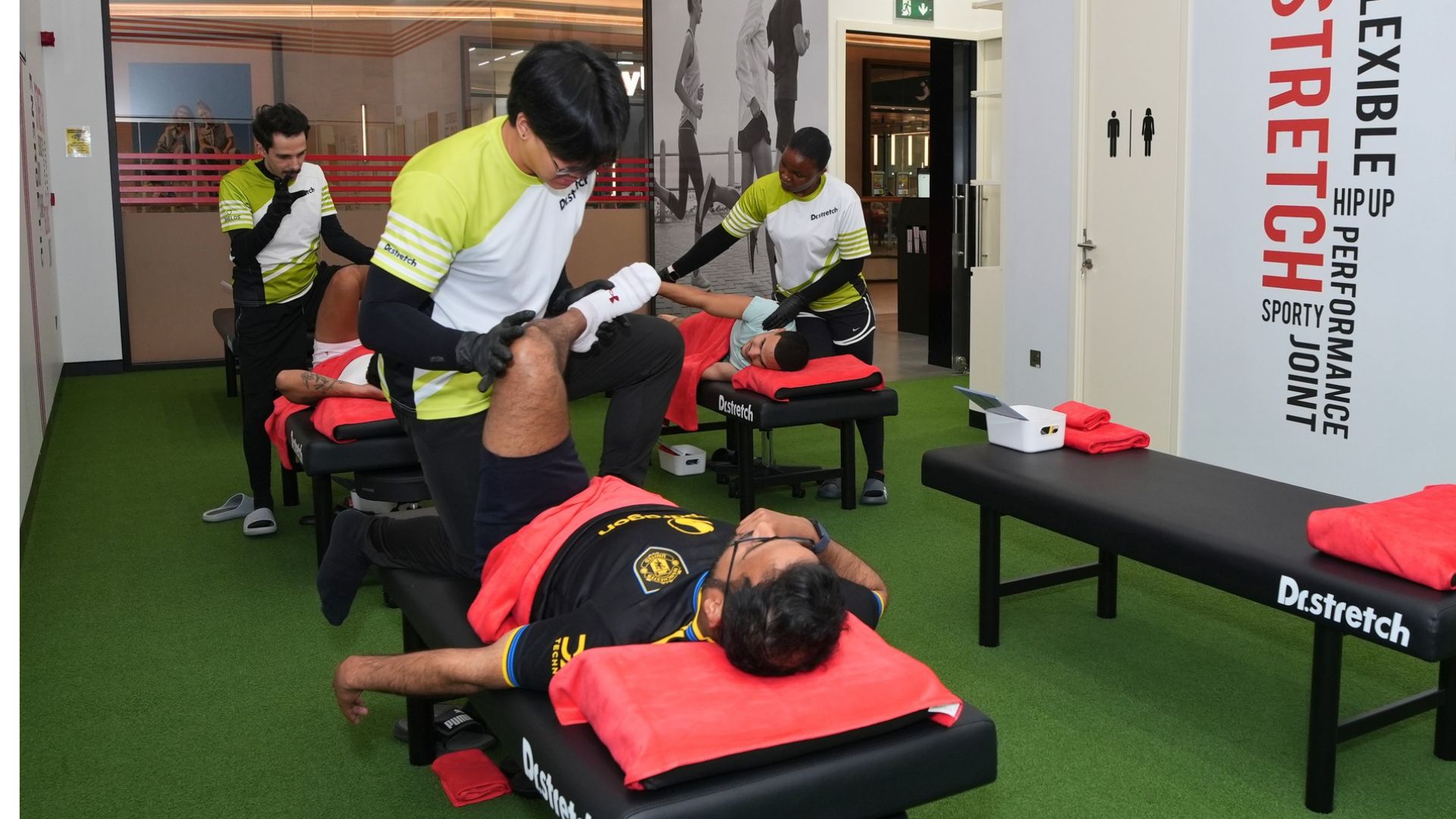
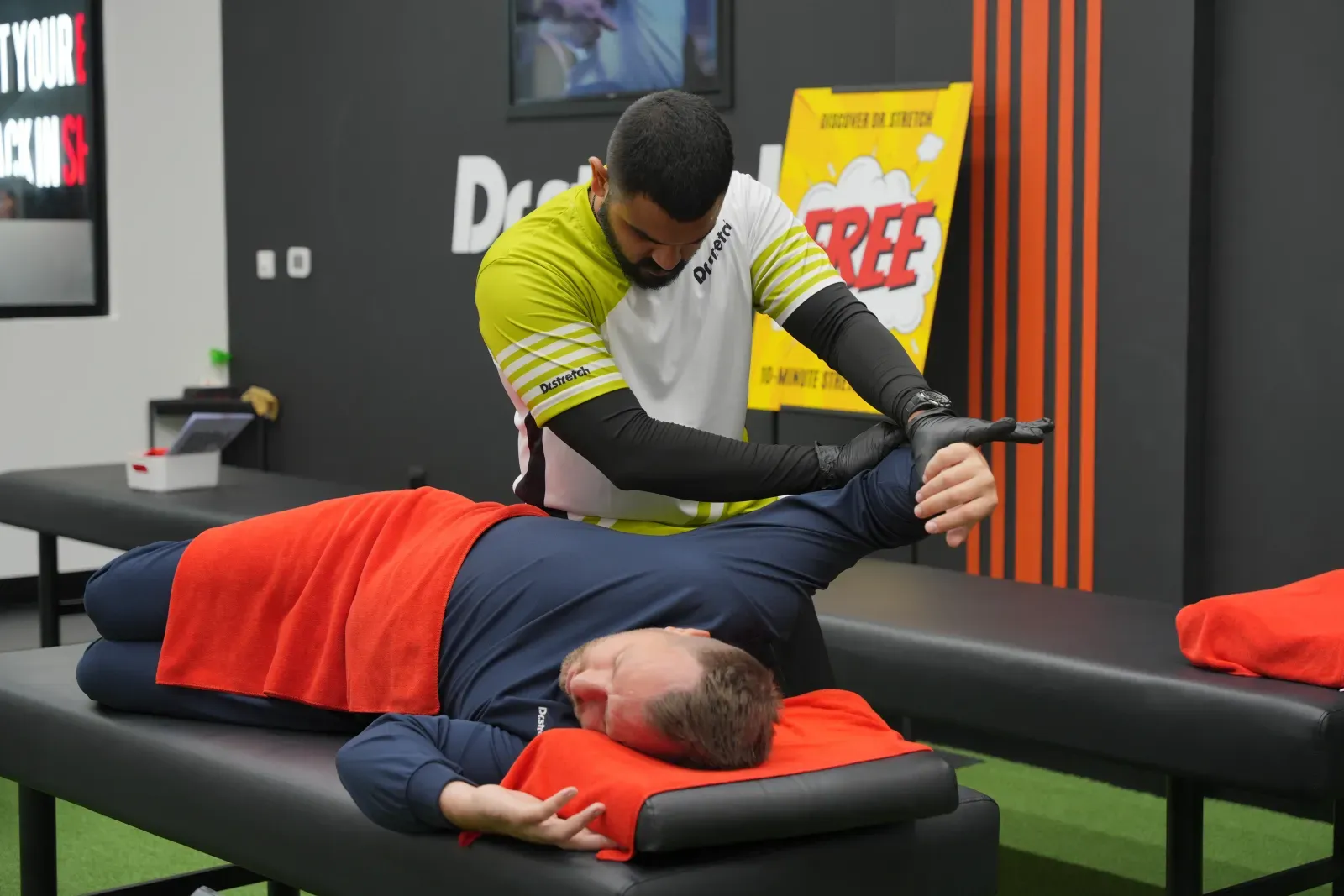
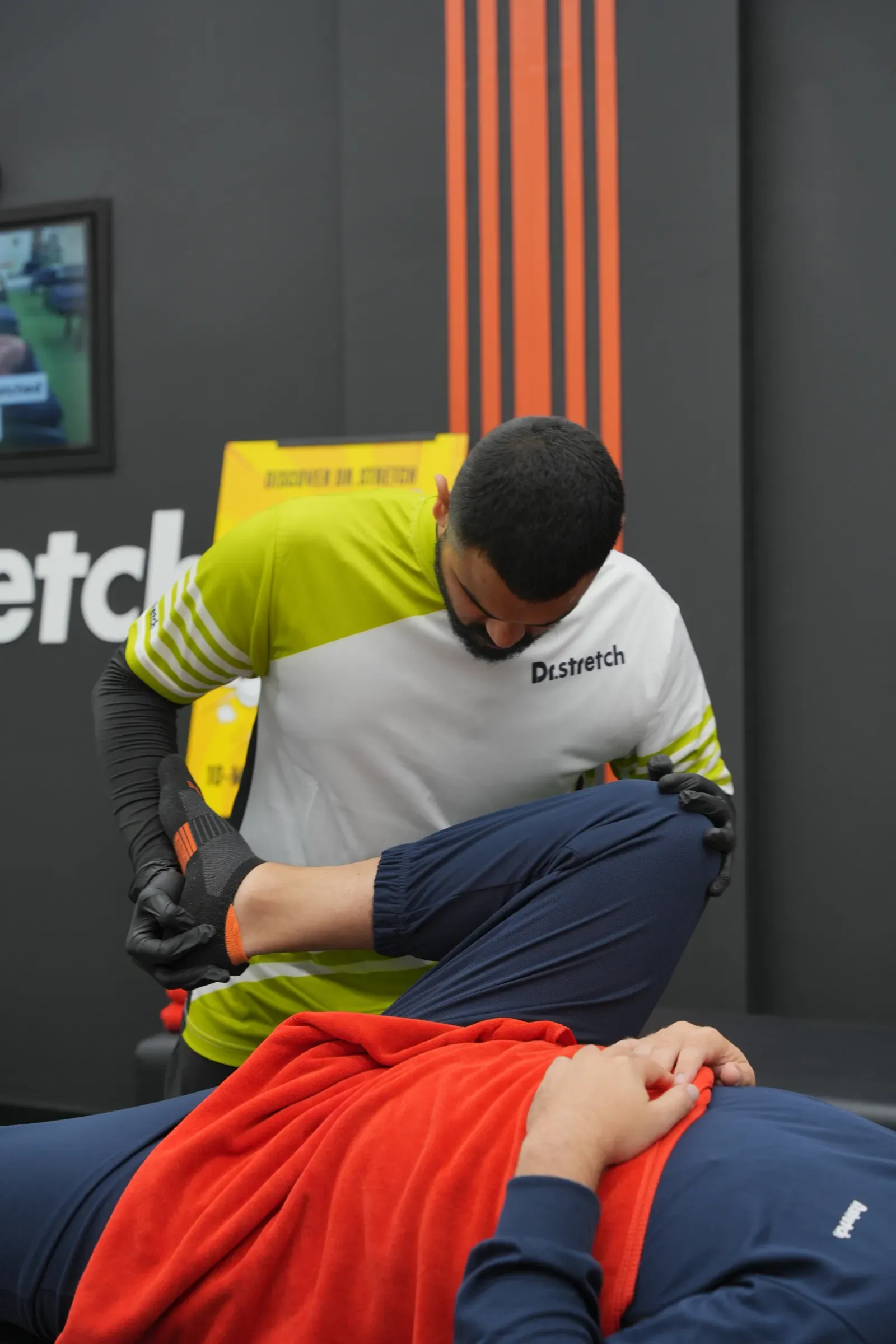
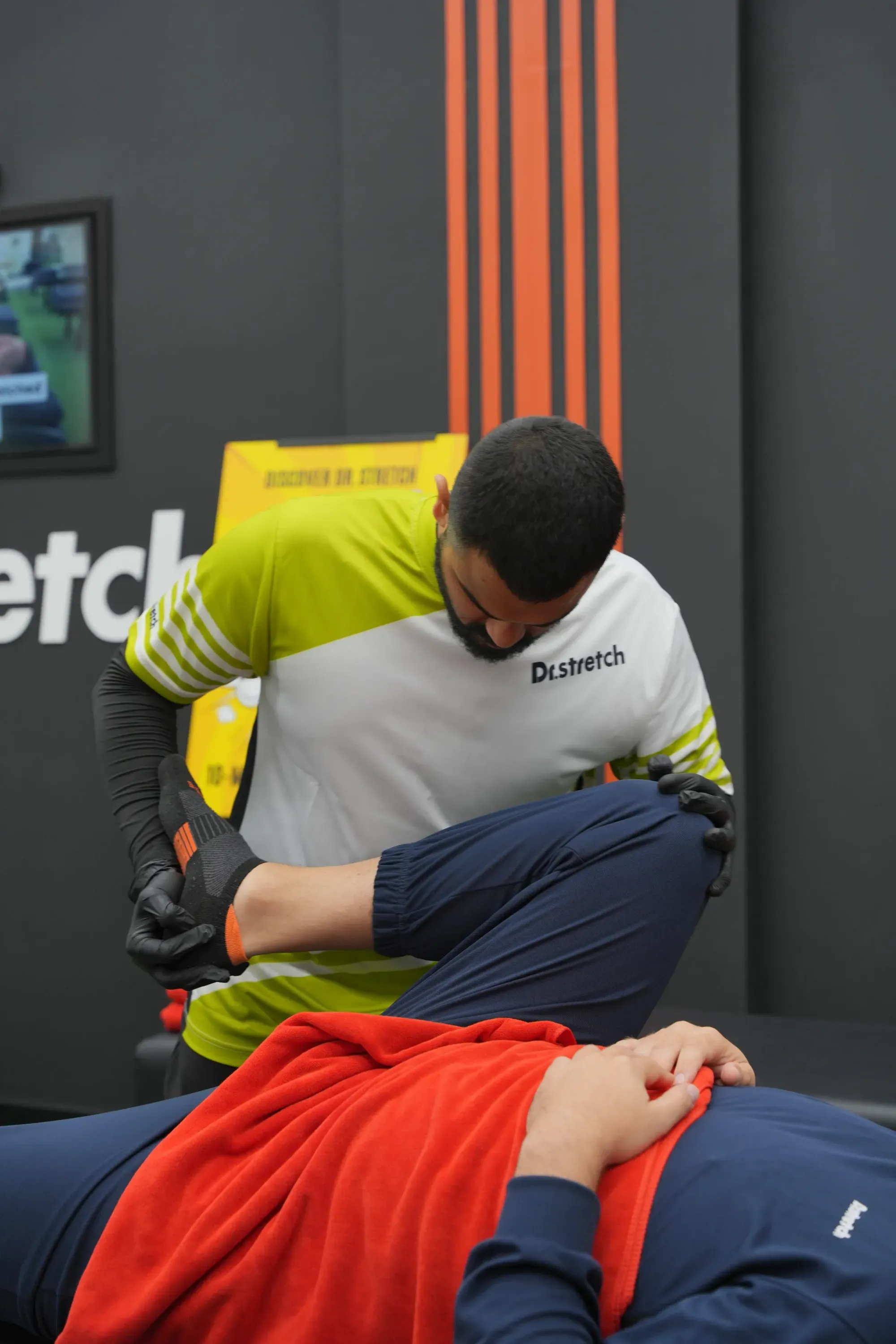
Certified Dr.stretch trainer guiding an assisted hip stretch in a UAE studio

The short answer: research from the last three years suggests that regular stretching produces a moderate, reliable improvement in flexibility and range of motion, may help reduce musculoskeletal pain such as back and neck pain, and keeps most of its benefit for several weeks after you stop. Assisted stretching – where a trained practitioner positions, supports and guides each stretch – applies the techniques that perform best in that research, including static and PNF-style (contract-relax) stretching, in a consistent and controlled way.

What stretching is not, according to a 2025 international expert consensus, is a stand-alone injury-prevention strategy or a recovery shortcut. The evidence is strongest for mobility, flexibility and comfort, and that is where assisted stretching in Dubai and Abu Dhabi can earn a place in your week.

Life in the UAE is hard on the body in a very particular way. Long hours at a desk in DIFC or on Al Maryah Island, long drives on Sheikh Zayed Road, air-conditioned offices, and then a padel match, a 5-a-side game or a run along the Corniche once the heat drops. The result for many residents is tight hips, a stiff lower back and a neck that never quite relaxes. Below, we walk through what the science says, how often you need to stretch to see results, and what to expect from a session.

What is assisted stretching?

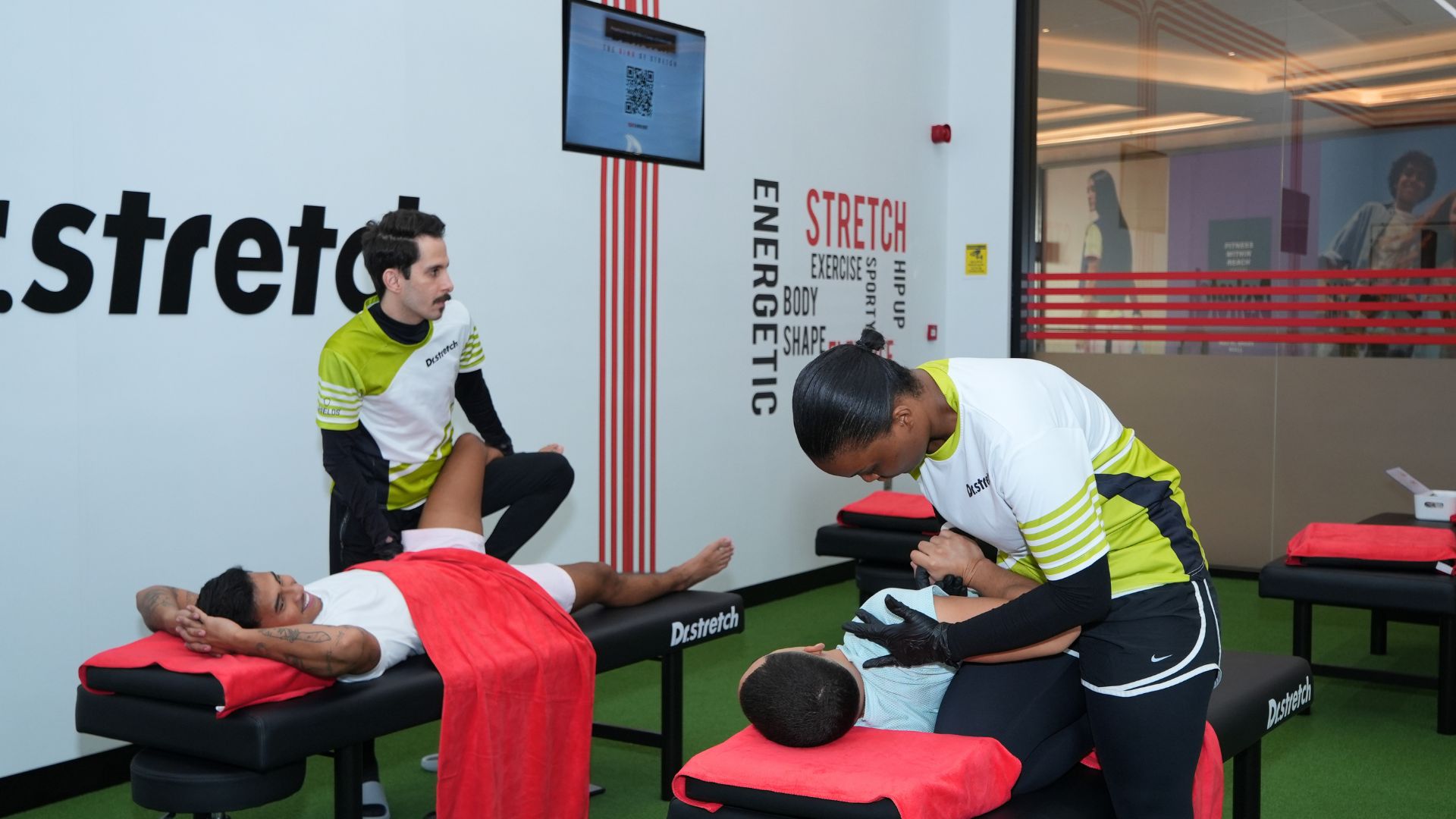
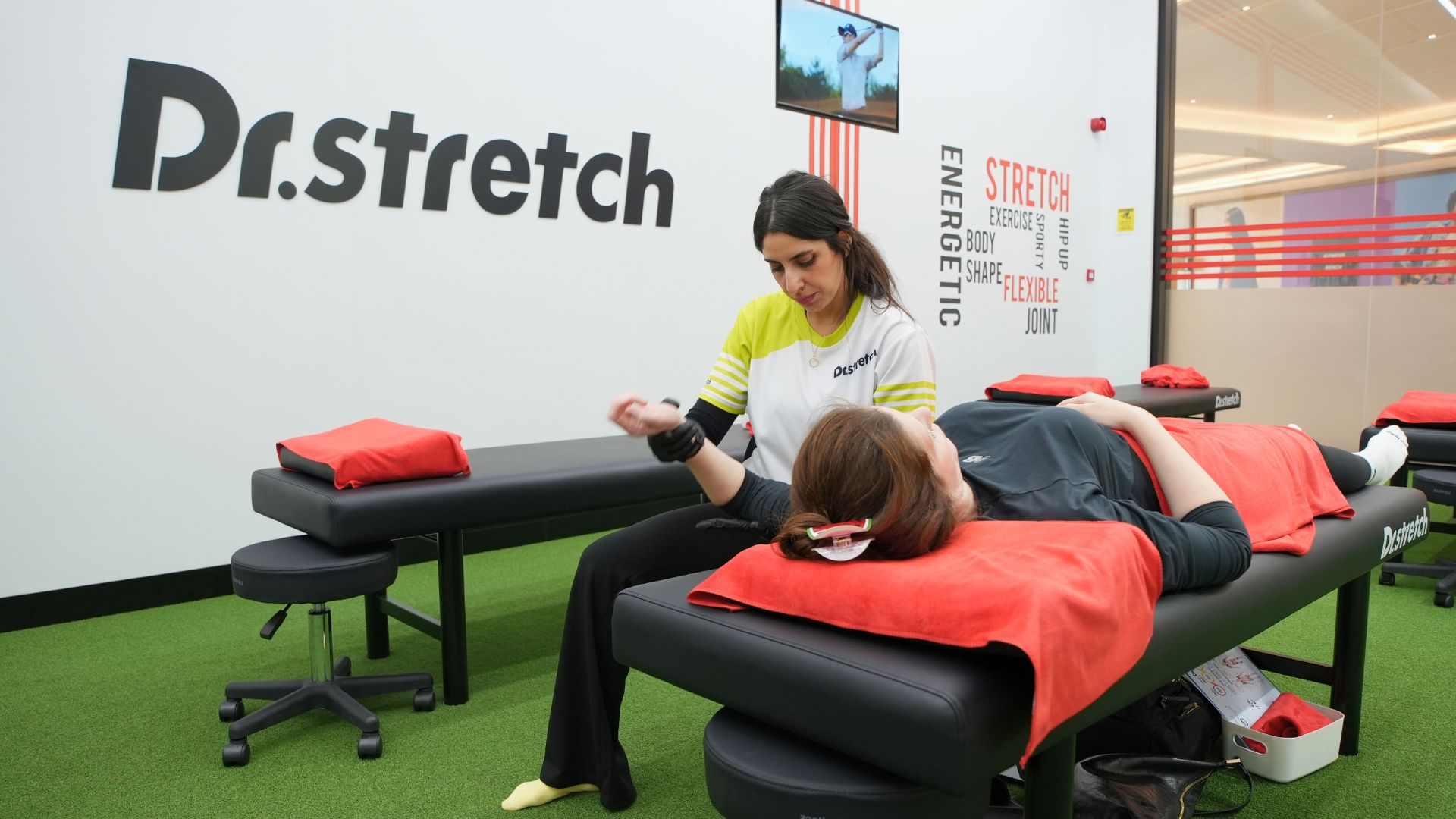
Assisted stretching is a one-to-one session in which a trained practitioner moves your body into each stretch, stabilises the surrounding joints and controls the depth and duration, while you stay relaxed. It is sometimes called partner stretching or practitioner-assisted stretching. For a full introduction, read what is assisted stretching.

How it differs from stretching on your own:

  • Relaxation: you are not holding your own body weight or balance, so the target muscle can let go more fully.
  • Precision: a trainer can isolate one area – a single hip rotator, for example – that is hard to reach alone.
  • Technique: contract-relax (PNF) stretching, one of the most effective methods in the research, needs a second person to apply resistance safely.
  • Consistency: a booked session removes the most common barrier to stretching – actually doing it.

At Dr.stretch, sessions use Core Balance Stretch, a method developed in Japan for elite professional athletes: the trainer stabilises the joints around a tight area before stretching it, so the stretch lands where the restriction is.

What does the research say about assisted stretching, flexibility and range of motion?

The evidence that stretching improves flexibility is now very strong. A 2024 meta-analysis in the Journal of Sport and Health Science pooled 77 studies and 3,870 participants and found a moderate improvement in range of motion versus non-stretching controls. Two findings matter for assisted stretching:

  • Static and PNF stretching produced greater range-of-motion gains than dynamic or ballistic stretching. These are exactly the techniques a practitioner applies best.
  • Intensity, age and session length were not significant moderators. You do not need to push into pain, and gains were seen across age groups.

A 2025 review of stretching modalities in Sports Medicine – Open adds that PNF stretching improves range of motion across intensities but requires an operator – in other words, a second person. It also reports that long-term stretching programmes improve flexibility without reducing strength.

More recent clinical research on guided assisted stretching points the same way. A small 2026 prospective cohort study of a standardised, practitioner-assisted stretching protocol in 32 healthy adults (mean age 43) tested one or two sessions a week of 30 or 60 minutes over four weeks. Participants improved on 33 of 35 range-of-motion measures – including roughly 10° of extra hip flexion and 8° of lumbar flexion – and kept about 81% of those gains at a 30-day follow-up. The study was industry-funded and small, so treat it as encouraging rather than conclusive.

Stretching for mobility: moving better in everyday life

Flexibility is how far a muscle can lengthen; mobility is how well you use that range in real movement – squatting to pick up a child, rotating for a padel backhand, checking your blind spot. Better range of motion at the hips, spine and shoulders gives you more usable room to move. Our hip mobility guide explains why hips in particular tighten up.

Research suggests much of the early gain comes from improved stretch tolerance: your nervous system becomes more comfortable at longer muscle lengths. With consistent stretching over weeks, muscle and tendon stiffness can also reduce. In the 2026 cohort study above, quality-of-life scores (SF-36) rose from 71 to 85, with improvements in seven of eight domains – an early sign that range-of-motion gains may carry over into how people feel day to day.

Can assisted stretching help with back pain, neck pain and musculoskeletal pain?

Research suggests it can support pain relief for many people, though it is not a treatment for injury or disease.

A 2025 systematic review in the European Journal of Applied Physiology looked at chronic stretch training and musculoskeletal pain across six high-quality studies (658 participants, programmes of four weeks to six months). Five of the six reported significant reductions in pain, with small to large effects, using measures such as the Oswestry Disability Index for low back pain. The authors concluded the evidence supports stretching as an effective intervention for relieving musculoskeletal pain, likely through better range of motion and reduced muscle stiffness.

For neck pain, a 2024 meta-analysis of office workers in Applied Ergonomics found that exercise reduced pain in seven of eight trials, with strengthening the main intervention studied. The practical lesson for desk-bound professionals in Dubai and Abu Dhabi: stretching for neck pain and back pain works best alongside regular strengthening and movement breaks, not instead of them. See our guides to neck and shoulder stretching, back stiffness and stretching for desk workers.

In the 2026 practitioner-assisted cohort, 78% of participants reported a drop of two points or more on a pain scale after four weeks.

If you have persistent, severe or radiating pain, see a doctor or physiotherapist first.

Does assisted stretching reduce injury risk?

This is where honest science matters. A 2025 Delphi consensus of international stretching researchers agreed that stretch training does not serve as an all-encompassing injury prevention strategy, and that stretching does not meaningfully speed up post-exercise recovery. A 2025 meta-analysis in Frontiers in Physiology (15 trials, 465 participants) likewise found no significant effect of post-exercise stretching on next-day soreness or performance.

So where does stretching to reduce injury risk fit? Limited range of motion is a recognised risk factor in some sports – tight hamstrings and hips in football and sprinting, restricted shoulders and thoracic spine in racket sports. Restoring that range, as part of a wider programme of strength training, sensible load and warm-ups, may help you move with fewer restrictions. Mayo Clinic notes that better flexibility may lower injury risk and improve performance in daily activities. Think of assisted stretching as one supporting layer, not a shield. Our sports recovery guide covers where it fits for padel, tennis, golf and running.

How often should you do assisted stretching to see results?

The research gives a clear pattern:

  • Minimum frequency: Mayo Clinic recommends stretching at least two to three times a week.
  • Session dose: in the 2026 assisted-stretching cohort, one to two sessions a week of 30–60 minutes improved range of motion within four weeks.
  • Hold time: around 30 seconds per stretch, up to 60 seconds for problem areas.
  • Does more always help? Not necessarily – the 2024 meta-analysis found frequency and duration were not significant moderators. Consistency matters more.
  • What if you stop? A 2025 meta-analysis (13 studies, 556 participants) found gains stay above baseline after two to six weeks off, but roughly 40% of the improvement fades.

The takeaway: steady, regular sessions over weeks beat occasional intense ones, and maintaining results means keeping some stretching in your routine.

Key takeaways: what the science says about assisted stretching

  • Regular stretching produces a moderate, well-established improvement in flexibility and range of motion (77 studies, 3,870 people).
  • Static and PNF (contract-relax) techniques – the core of assisted stretching – outperform dynamic and ballistic stretching for range of motion.
  • Stretching programmes may reduce musculoskeletal pain, including low back pain, especially combined with strengthening.
  • Gains last for weeks after you stop, but around 40% fades without maintenance.
  • Stretching supports injury-risk reduction as part of a wider programme; it is not a stand-alone injury shield.
  • One to three sessions a week, done consistently, is the pattern most research supports.

Putting it into practice: assisted stretching in Dubai and Abu Dhabi

  • Desk-based professionals: one or two sessions a week focused on hips, lower back, chest and neck, plus short movement breaks during the working day.
  • Padel, tennis and golf players: focus on thoracic rotation, shoulders and hips; book sessions on rest days rather than right before a match.
  • Runners and footballers: hamstrings, hip flexors and calves, alongside strength work.
  • Active adults focused on longevity: a consistent weekly session to maintain range of motion as you age.
  • Expect tension, never pain. Tell your trainer about any injury, surgery or medical condition before you start.

What does an assisted stretching session at Dr.stretch look like?

  1. A short consultation. Your certified trainer asks about your routine, sport, tight areas and any injuries.
  2. A quick movement check. Simple range-of-motion tests show where you are restricted.
  3. A personalised, hands-on session. You lie or sit on a treatment bench in comfortable clothing while your trainer guides you through Core Balance Stretch – stabilising the surrounding joints, then stretching the target area at a depth you are comfortable with.
  4. Advice to take home. Simple suggestions to help maintain your progress between visits.

Sessions are 40, 60 or 90 minutes, in a calm, private setting, and every studio has a private ladies-only room. More detail is on what to expect in your first session. Dr.stretch began in Japan in 2010 and today has more than 300 studios in eight countries; the UAE was its first franchised market outside Japan.

Ready to feel the difference? Find your nearest studio for assisted stretching in Dubai (Dubai Hills Mall, Golden Mile Galleria on Palm Jumeirah, Nad Al Sheba Mall) or assisted stretching in Abu Dhabi (Marina Mall, Reem Mall, Yas Mall), compare session options on our pricing and packages page, and claim the 25% first-visit discount.

Frequently asked questions about assisted stretching in the UAE

What is the difference between assisted stretching and massage?

Massage works mainly on soft tissue through pressure. Assisted stretching moves your joints through their range of motion to lengthen muscles and improve flexibility. Many people use both, but they target different goals.

How quickly will I notice results from assisted stretching?

Many people feel looser after a single session. Measurable range-of-motion gains in research typically appear within four weeks of one to two sessions a week, and build further with consistency.

Is assisted stretching good for back pain?

Research suggests regular stretching may help reduce musculoskeletal pain, including low back pain, especially combined with strengthening. It is not a substitute for medical care, so see a doctor for severe, persistent or radiating pain.

Can assisted stretching prevent sports injuries?

Stretching on its own is not a proven injury-prevention strategy. Improving restricted range of motion may support lower injury risk as part of a programme that includes strength training, warm-ups and sensible training loads.

Who is assisted stretching suitable for?

It suits most adults – desk workers, athletes, weekend padel players and anyone wanting to move more freely. If you are pregnant, recovering from surgery or managing a medical condition, check with your doctor first and tell your trainer.

Where can I try assisted stretching in Dubai and Abu Dhabi?

Dr.stretch has six studios across the UAE: Dubai Hills Mall, Golden Mile Galleria and Nad Al Sheba Mall in Dubai, and Marina Mall, Reem Mall and Yas Mall in Abu Dhabi. See all Dr.stretch UAE locations and book on WhatsApp.

References

  1. Konrad A, Alizadeh S, Daneshjoo A, et al. (2024). Chronic effects of stretching on range of motion with consideration of potential moderating variables: a systematic review with meta-analysis. Journal of Sport and Health Science, 13(2), 186–194.
  2. Konrad A, Nakamura M, Sardroodian M, et al. (2025). The effects of chronic stretch training on musculoskeletal pain. European Journal of Applied Physiology, 125(8), 2037–2048.
  3. Konrad A, Warneke K, Donti O, et al. (2025). Detraining effects following chronic stretching training on range of motion: a systematic review and meta-analysis. Sports Medicine – Open, 11.
  4. Muscle stretching: exploring the impact of different modalities on maximal range of motion and strength with practical recommendations (2025). Sports Medicine – Open.
  5. Practical recommendations on stretching exercise: a Delphi consensus statement of international research experts (2025). PubMed.
  6. Xing et al. (2025). Effects of post-exercise stretching versus no stretching on lower limb muscle recovery and performance. Frontiers in Physiology, 16.
  7. Jones LB, Jadhakhan F, Falla D (2024). The influence of exercise on pain, disability and quality of life in office workers with chronic neck pain: a systematic review and meta-analysis. Applied Ergonomics, 117.
  8. Mayo Clinic. Stretching: focus on flexibility.
  9. Prospective cohort study of a standardised practitioner-assisted stretching protocol in healthy adults (2026). Journal of Musculoskeletal Disorders and Treatment.
Share this  post

Related Blogs

Interested in reading & learning more? check out some of our other posts below!
Assisted Stretching in the UAE: What the Latest Research Says About Flexibility, Mobility and Pain

Assisted Stretching UAE: What the Latest Research Says

Research suggests assisted stretching can improve flexibility, range of motion and pain. See what the science says – and how often – in Dubai and Abu Dhabi.
From Japan to Yas Mall: The Dr.stretch UAE Story

The Dr.stretch UAE Story – From Japan to Six Studios

How Dr.stretch grew from Japan to 300+ studios in eight countries – and how the UAE went from one studio on Reem Island in 2023 to six with Yas Mall.
The Stretches Dr.stretch Trainers Recommend Again and Again

Best Stretches Our Trainers Recommend | Dr.stretch UAE

One trainer might immediately mention the hips. Another might swear by a good quad stretch. Someone else might tell you that the shoulders and upper back deserve far more attention than they usually get.
Why Trainer Education Matters: The Work Behind Every Dr.stretch Session

Why Stretch Trainer Education Matters | Dr.stretch UAE

Before new trainers begin working with clients in our studios, they go through thorough training and education. The purpose is straightforward: make sure they are equipped with the knowledge and skills required to work with the people who trust us with their bodies.
The Making of a Dr.stretch Trainer: What Happens Before Your First Stretch

How Dr.stretch Trainers Are Prepared for Your First Session

At Dr.stretch, becoming a stretch trainer isn't simply about knowing how to stretch. Before stepping onto the studio floor, new trainers go through thorough training and education designed to prepare them for the different people, bodies and concerns they will encounter during a session.
Assisted Stretching vs Massage for Recovery: An Evidence-Based Guide

Assisted Stretching vs Massage for Recovery | Dr.stretch

Compare assisted stretching vs massage for recovery. This evidence-based guide (Dubai-focused) covers mechanisms, benefits, clinical studies, and practical tips on when to use each therapy. Optimize recovery with stretch or massage
A Useful Guide for Stretching Quads Techniques

A Useful Guide for Stretching Quads Techniques | Dr.stretch

Learn the right techniques for stretching quads and significantly improve your mobility, reduce soreness, and enhance athletic performance.
Bodybuilding Recovery in Dubai & Abu Dhabi: Why Assisted Stretching Is the Missing Link for Muscle Growth

Assisted Stretching for Bodybuilding Recovery | Dr.stretch

How assisted stretching supports mobility and recovery between heavy training sessions – and where it fits alongside lifting, sleep and nutrition.
Stretching for Longevity: How Assisted Stretching Extends Your Healthspan in Dubai & Abu Dhabi

Stretching for Longevity: Mobility as You Age | Dr.stretch

Why mobility matters for healthy ageing, and how regular assisted stretching can help you keep moving freely for longer.
The Fascinating World of Fascia: Why Stretching It Matters

Unlocking the Secrets of Fascia: How Dr.stretch Helps You Move Freely

Discover the power of fascia — the hidden connective tissue shaping your mobility. Learn how Dr.stretch’s assisted stretching releases tight fascia to boost flexibility, reduce pain, and improve your daily life.
Game, Set, Stretch: The Beach Tennis Player’s Guide to Staying Match-Ready

Beach Tennis: Stay Match-Ready with Stretching | Dr.stretch

Beach tennis players—stay agile, prevent injuries, and improve recovery with Dr.stretch.
Triathlon Ready: How Champions Prep - And Why Stretching Is Your Secret Weapon

Triathlon Prep: Champions Rely on Stretching | Dr.stretch

Train smart like a triathlete: discover how assisted stretching boosts endurance, recovery, and injury prevention.
Tango Your Way to Better Movement: Why Dancers are Turning to Dr.stretch

Dance Better: Assisted Stretching Benefits for Dancers | Dr.stretch

Tango lovers: discover how assisted stretching boosts flexibility, balance, and fluid movement—for dancers and beyond.
Smash It on the Squash Court — Then Stretch It Out with Us!

Smash It on the Squash Court—Stretch It Out | Dr.stretch

Squash players recover faster—Dr.stretch boosts flexibility, prevents soreness, and keeps you in the game.
Smash the Heat: Why Indoor Badminton is Your New Summer Obsession in the UAE

Indoor Badminton: Stay Match-Ready with Stretching | Dr.stretch

Badminton players—boost speed, reduce soreness, and recover faster with assisted stretching at Dr.stretch.
Climb to New Heights This Summer with Indoor Rock Climbing!

Indoor Rock Climbing: Stay Flexible & Injury-Free | Dr.stretch

Rock climbers need flexibility—Dr.stretch helps reduce tightness, improve grip reach, and keep you climbing stronger.
Kick, Jab, and Flow: Why Martial Arts & Boxing Workshops Are the Ultimate Summer Release in the UAE

Martial Arts & Boxing: Why Stretching Is Essential | Dr.stretch

Unleash energy this summer with martial arts and boxing workshops — plus assisted stretching for strength, focus, and recovery.
Spin, Sweat, Stretch, Repeat!

Spin, Sweat & Stretch: Boost Recovery | Dr.stretch

Cyclists and spinners—Dr.stretch boosts performance, eases soreness, and improves recovery.
Run Freely This Summer: Why Every Runner Needs Dr.stretch in Their Routine

Run Freely: Stretching Every Runner Needs | Dr.stretch

Beat the summer heat and keep running strong—Dr.stretch helps prevent injury and keep runners moving freely.
Why Your Summer Swim Needs a Stretch Boost!

Why Every Swimmer Needs Stretching This Summer | Dr.stretch

Swimmers recover faster, improve stroke, and avoid shoulder strain with assisted stretching at Dr.stretch.
Can’t Touch Your Toes? Here’s the Simple Trick to Fix That!

Can’t Touch Your Toes? Here’s How to Fix That | Dr.stretch

Struggling with flexibility? Dr.stretch makes touching your toes (and more) possible with assisted stretching.
Elevate Your Padel Game: The Power of Assisted Stretching

Boost Your Padel Game with Assisted Stretching | Dr.stretch

Take your padel game higher—boost flexibility, prevent injury, and recover faster with Dr.stretch.
The Busy Parent’s Guide to Loosening Tight Muscles

Busy Parents: Loosen Tight Muscles with Stretching | Dr.stretch

Parents, reclaim your energy—Dr.stretch relieves tightness and stress so you can keep up with life.
Elevate Your Yoga Practice with Dr.stretch

Stretch Beyond the Mat: Yoga Meets Dr.stretch

Yogis, take it further—Dr.stretch improves flexibility, posture, and recovery beyond the mat.
Alleviate Plantar Fasciitis Pain with Dr.stretch

Plantar Fasciitis and Assisted Stretching | Dr.stretch

Plantar fasciitis explained, and how gentle, targeted stretching of the foot and calf can help ease heel tension alongside medical advice.
Beat IT Band Syndrome with Dr.stretch

IT Band Tightness and Assisted Stretching | Dr.stretch

What IT band syndrome is, and how stretching the hips, quads and hamstrings can help ease tightness for runners and cyclists.
Thawing the Frozen Shoulder with Dr.stretch

Frozen Shoulder and Assisted Stretching | Dr.stretch

Frozen shoulder explained, and how gentle assisted stretching may help support shoulder mobility alongside your doctor's or physiotherapist's care.
Personalized Assisted Stretching for CrossFit Athletes at Dr.stretch

CrossFit Recovery: Personalized Stretching | Dr.stretch

CrossFit athletes recover smarter—Dr.stretch boosts mobility, prevents injury, and powers performance.
The Benefits of Assisted Stretching by Dr.stretch for the Aging Body

Aging Gracefully: Assisted Stretching Benefits | Dr.stretch

Age gracefully—assisted stretching helps seniors stay mobile, pain-free, and active with Dr.stretch.
Can Assisted-Stretching Help With Stress? 

Relieve Stress with Assisted Stretching | Dr.stretch

Feeling stressed? Learn how assisted stretching lowers tension, restores mobility, and brings calm to body and mind.
Cycling into a Higher Gear

Cyclists: Boost Power & Recovery with Stretching | Dr.stretch

Cyclists improve posture, reduce tightness, and recover quicker with Dr.stretch’s assisted stretching sessions.
Rhomboid Stretch

Rhomboid Stretch: Relieve Upper Back Tension | Dr.stretch

Soothe upper back tightness—Dr.stretch’s rhomboid stretches release tension and restore posture.
A Golfer's Guide

Golfer’s Guide: Improve Swing & Flexibility | Dr.stretch

Golfers, unlock your swing! Discover how assisted stretching with Dr.stretch improves range, control, and recovery.
Combating Joint Issues

Combating Joint Issues with Assisted Stretching | Dr.stretch

Ease joint stiffness with assisted stretching—Dr.stretch keeps you mobile, active, and pain-free.
Isolated Stretching for Athletic Performance

Isolated Stretching: Unlock Peak Performance | Dr.stretch

Elevate your game: isolated stretching enhances power, flexibility, and faster recovery—see how with Dr.stretch.
Goodbye to Lower Back Pain

Say Goodbye to Lower Back Pain with Stretching | Dr.stretch

Common causes of lower back stiffness, three simple stretches to try at home, and how assisted stretching can help ease tension.
Get In Touch